
Move to Improve by Christina Dorner: A Trainer's 30-Day Guide
By Team Veronika Fitness · November 13, 2026
A certified group fitness instructor who works as a trainer at a gym.
I'm a trainer at a gym, and lately I've been doing a little side project: picking complete workout series from different YouTube creators, doing every single workout, and logging all the sets and minutes. Mostly because YouTube fitness reviews are usually just "felt the burn, loved her energy!" — which doesn't tell you much about whether a program actually fits your body or your goals.
First up on my list: Christina Dorner's Move to Improve, a free 30-day beginner program.
A little backstory on why I picked a beginner series: I had a hernia and couldn't work out for a long time. When I was finally cleared to start moving again, I needed something structured and gentle to ease back in — not my usual training, and definitely nothing that would rush my recovery. I already love Christina's step classes, so when I saw she had a 30-day beginner program, I figured it was the exact on-ramp I needed.
Honestly, it ended up being the best possible way to test it. I wasn't breezing through it as an uninjured trainer; I was genuinely starting from square one, low on conditioning, and happy to let someone else call the shots for a month.
What the 30 days actually look like
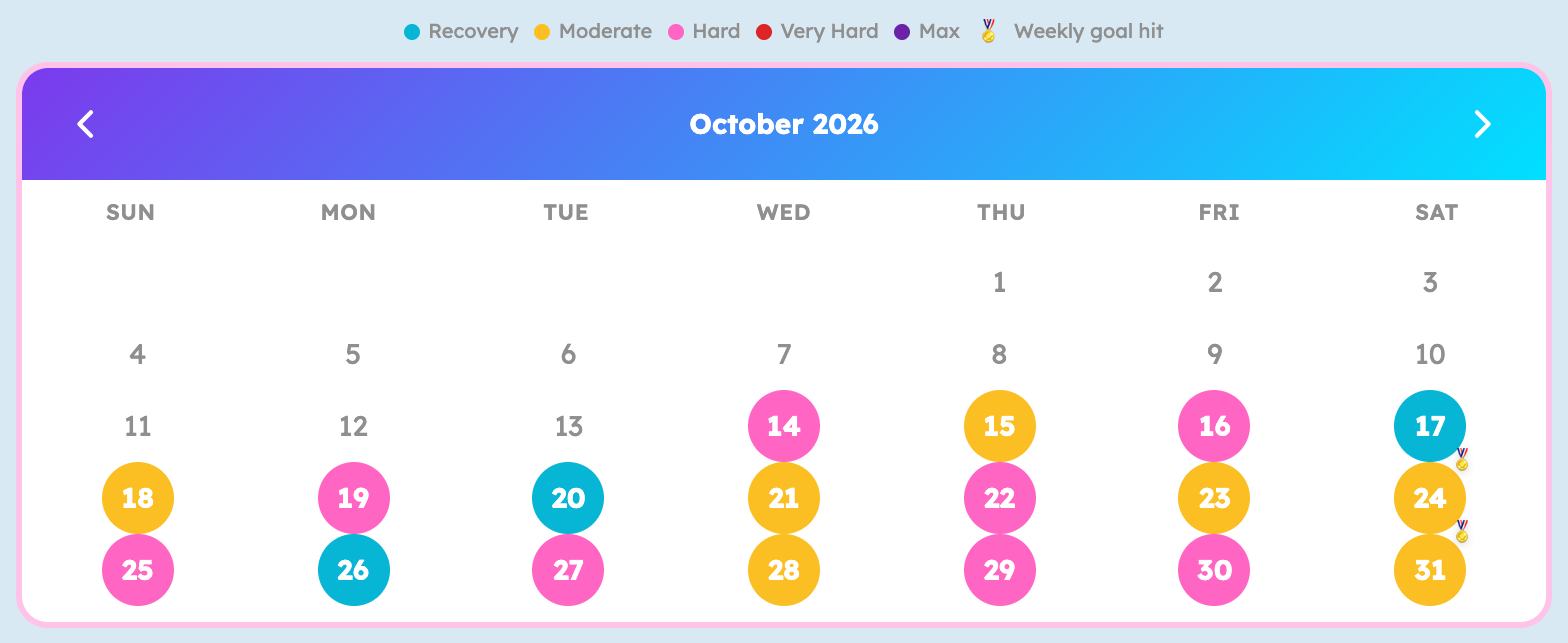
It's one short workout a day — most are 15 to 30 minutes (averaging 23 minutes), and all you need is a couple pairs of dumbbells and a little floor space. Across the month, the schedule shakes out to roughly:
- 13 light-dumbbell strength days
- 8 steady-state cardio / walking days
- 5 beginner-friendly HIIT days
- 4 stretch and recovery days
Christina's coaching style
Christina walks you through every single movement — how to set it up properly, how to progress it, and which muscles are actually supposed to be doing the work. Even though it's usually just her on screen, it feels like you're in the room doing the workout together. She's friendly, upbeat, and genuinely fun, and sometimes her adorable dogs even join in on class. If you've ever been to a great in-person group fitness class, that's the exact vibe you get from her channel without the hassle of leaving the house.
What this program is best for
- Building the habit and a base of general conditioning: This is what it’s made for. A short workout every day, a mix of light strength, cardio, and stretching, and nothing that will wreck you—it’s the on-ramp, and it’s a very good one.
- Building muscle: Not really its job. The weights stay light all month, so apart from the early gains any new lifter sees, you’ll want a strength program after this one if muscle is the goal.
- Fat loss: It gets you moving every day, which is the hard part. The workouts are gentle, though, so the calorie burn is modest—most of the result will come from what you eat.
How it felt in real life
Sometimes I forget how challenging an exercise can be with just bodyweight if you do it slowly enough. Christina encourages a two-count pace on many of the days, and I really appreciated having someone set that tempo for me. Working out to a spreadsheet alone makes it way too easy to forget to go slowly — or, if you're like me, lets you conveniently avoid it. Having her pace me kept me honest, and I was pleasantly surprised at how much this program challenged me on days I didn't expect it to.
The trainer-nerd takeaways (and the numbers)
Running this whole month through the tracker turned up a few cool design details under the hood:
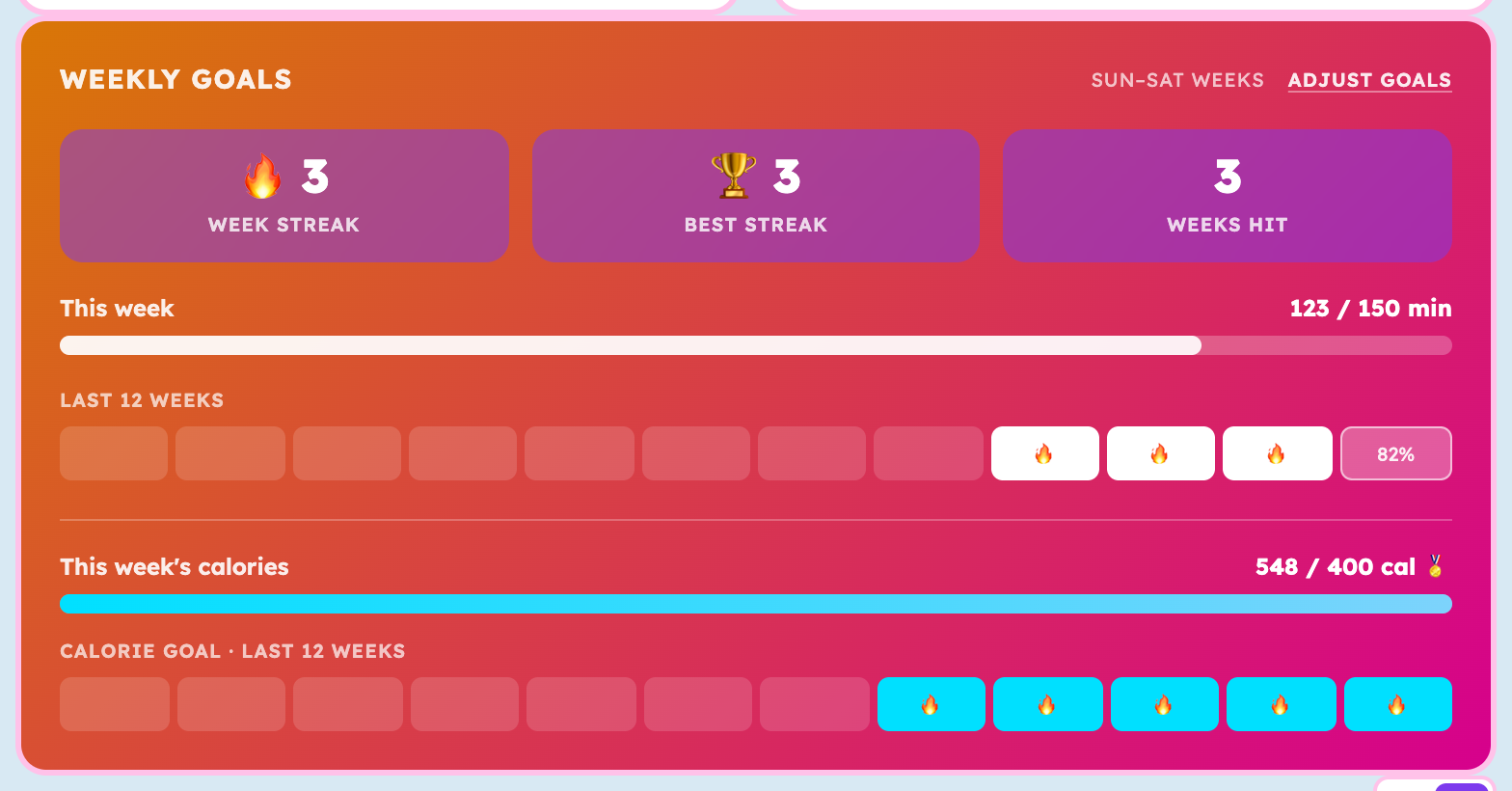
- It sneaks up on the weekly guidelines: I logged about 11.7 hours total across the 30 days, and every full week landed between 150 and 170 minutes. Without ever feeling grueling, it quietly hits the standard 150-minutes-a-week activity guideline in about 23 minutes a day. The consistency does the work here, not any single session.
- Smart progression without heavy weights: Instead of just telling you to grab heavier dumbbells, Christina progresses the movements. Lower body starts out as pure bodyweight before introducing light weights partway through. Full-body days move from single sets to multiple sets as the weeks go on. By weeks 2 and 3, basic moves start combining into combos (like a squat to overhead press, or a suitcase squat to hammer curl).
- Equipment: You can run the whole month with one light pair and one medium pair of dumbbells — think 5s and 8s or 10s — and be totally fine.
Who I'd recommend this to
- True beginners who want a realistic way to build a daily habit without getting crushed on day 1.
- Anyone coming back from surgery, an injury, or a long layoff who needs to rebuild a base before chasing intensity (this was me).
- People who keep quitting 45-minute programs because life gets in the way — 23 minutes is hard to talk yourself out of.
- Anyone with decision fatigue who just wants to press play for a month.
Who will probably be bored
If you're already lifting regularly and want hypertrophy or heavy strength work, this isn't that — it's a movement-habit and general conditioning program. Same goes if you crave long, drenched-in-sweat workouts, though there's nothing stopping you from tacking a walk onto the end.
The muscle-balance check (and two easy things to add)
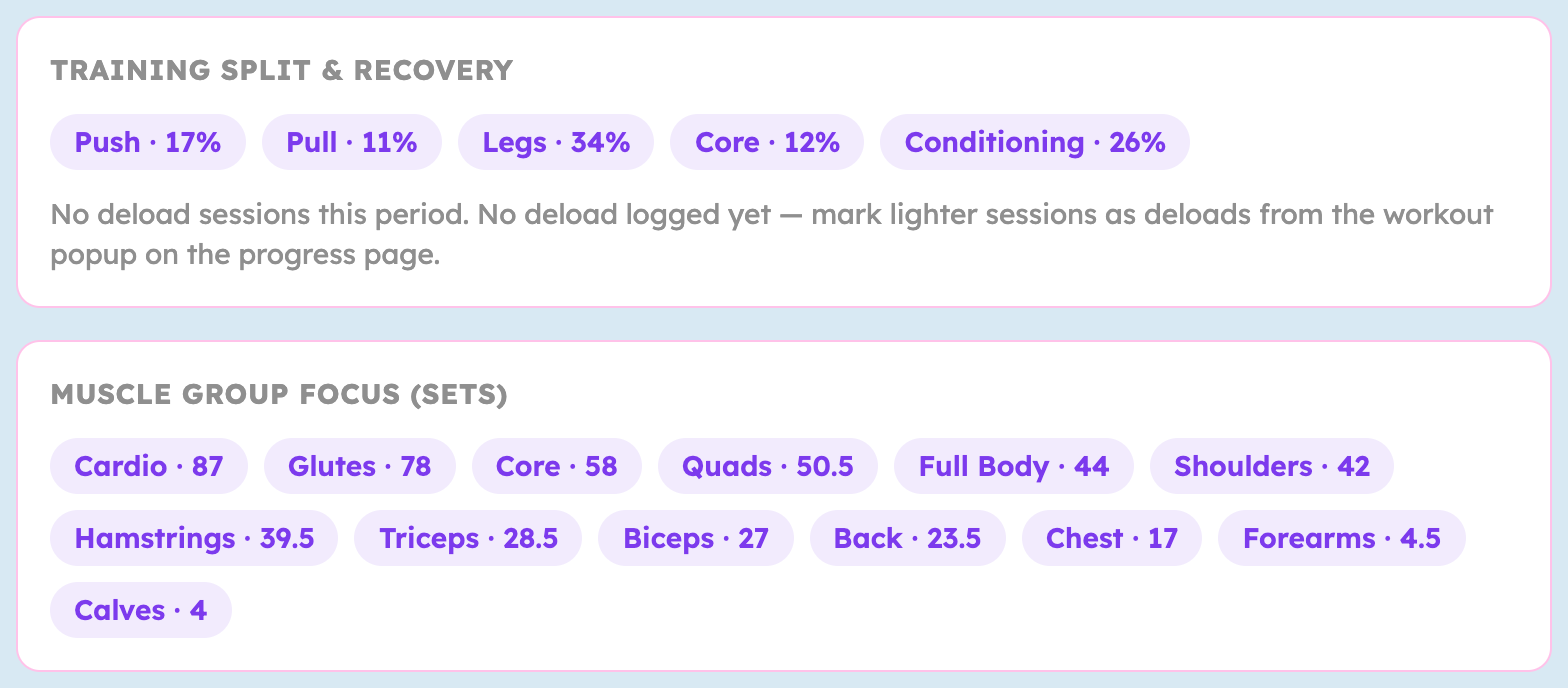
One cool perk of logging every set is seeing what actually gets worked over 30 days. Christina hits glutes, core, quads, and shoulders plenty, and hamstrings get solid work through bridges, deadlifts, and good mornings.
The only two blind spots in the data: calves (literally 4 sets across the entire 30 days) and upper-back pulling, where pressing noticeably outweighs rowing (my tracked split came out to 17% push vs. 11% pull).
Instead of bothering with isolated calf raises, the much better fix is to just mix in one of Christina's fun step classes — that alone completely fills the calf gap without feeling like a chore. Pair that with an extra dumbbell row twice a week, and you've got a really well-rounded month of training.