
Get Strong! by Cheryl Coulombe: A Trainer's 7-Week Guide
By Team Veronika Fitness · November 16, 2026
A certified group fitness instructor who works as a trainer at a gym.
I work as a trainer at a gym, and I’ve been working through complete workout series from different YouTube creators—doing every workout and logging all the sets and minutes—to see whether a program actually fits your body and your goals.
Third on my list: Cheryl Coulombe’s Get Strong! series. It’s 21 free, 30-minute, full-body dumbbell workouts, done three times a week for seven weeks.
A little backstory on why this one came next: after my hernia, I eased back in with a beginner program at home, then spent a month on gym machines getting used to real load again. The obvious next step was picking the dumbbells back up. I wanted something structured, low impact, and short enough that I’d never talk myself out of it—and three half-hour sessions a week is about as sustainable as a schedule gets.
One thing to know up front: this is a strength program, and only a strength program. There’s no cardio day and no mobility day, and that’s by design. More on what to pair it with below.
What the seven weeks actually look like
Three workouts a week—I did Monday, Wednesday, and Friday—with at least a day off between them, which is exactly how Cheryl tells you to space them.
Every workout follows the same blueprint:
- A 3- to 4-minute warm-up
- Four supersets (pairs of exercises)—the first two usually match a lower-body move with an upper-body one
- Each pair done back to back for three rounds of 12 reps, with a timed rest between rounds
- A core move in the final pair on most days
- A 2- to 3-minute cool-down stretch
All 21 workouts are different. The staples keep coming back—sumo deadlifts, Romanian deadlifts, rows, chest presses, overhead presses—but the variations rotate, so you’ll meet heel-elevated squats, B-stance deadlifts, close-grip and underhand rows, and a few bicep-curl variations I hadn't done in years.
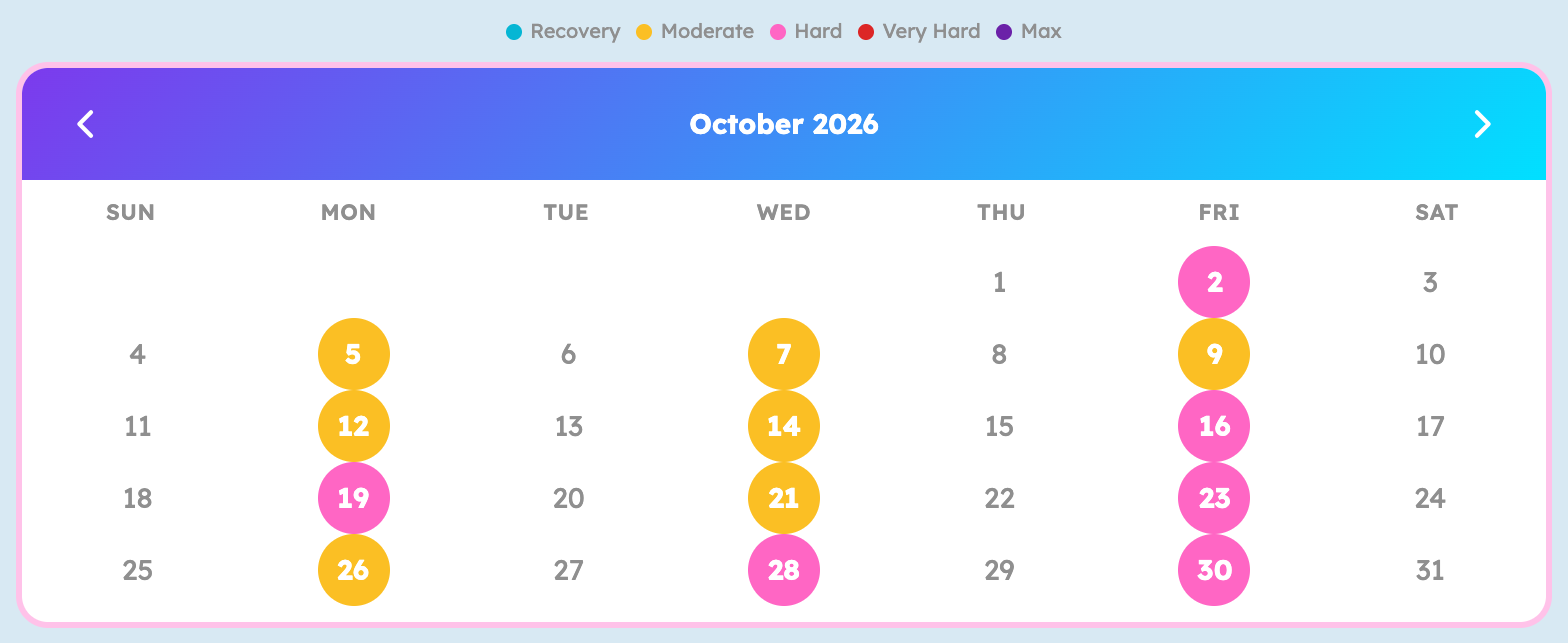
Mine ran 29 to 34 minutes, averaging 31 minutes. Over seven weeks, that came out to 21 workouts and just under 11 hours.
Cheryl's coaching style
Cheryl’s videos are quiet in the best way. At the start of each pair, she previews both exercises with the form cues that actually matter—where your feet go, which way your palms face, when to inhale and exhale, and which muscle you should feel working. Then the music takes over. She cues the start of every set and calls the last rep, while an on-screen timer counts your rest.
That’s it. No chatter, no countdown hype, no jumping. Every rep is slow and controlled, which makes it easy to focus on mind-muscle connection. She also lists the weights she’s using in each video description—"for reference only," as she puts it—which is a nice sanity check once you’ve been at it a while.
What this program is best for
- General strength: This is where it shines. Three full-body sessions a week, with every major movement trained each time, is a classic way to get stronger.
- Building muscle: A solid choice, as long as you keep reaching for heavier dumbbells. Three sets of 12, with each muscle worked three times a week, is real muscle-building volume. The limit is how heavy your dumbbells go.
- Fat loss: It covers the strength side only. There’s no cardio in the plan, so add your own, and remember that the rest comes down to what you eat.
How it felt in real life
The first week I kept everything light: 15s for deadlifts and squats, 10s for presses and curls, 5s for raises. Twelve reps at Cheryl’s pace is slower than it sounds, and the back-to-back pairs keep your heart rate up more than you’d expect from a low-impact workout.
Because every exercise is three sets of 12, it’s the easiest program I’ve logged so far. When all 12 reps felt solid, I went up a dumbbell size the next time that lift came around. The days with six straight sets of lunges were definitely the ones I felt the next morning.
One small tip: for the heel-elevated squats, a folded yoga mat under your heels works perfectly.
The trainer-nerd takeaways (and the numbers)
Running the seven weeks through my tracker (SweatHard.fit) turned up a few things under the hood:
- It’s 100% strength: Every single one of my logged minutes was strength training. Three sessions a week comfortably covers the standard recommendation to strength train at least twice a week.
- Thirty minutes actually means thirty minutes: Warm-up and cool-down included, the longest workout I logged was 34 minutes.
- Progression is yours to drive: The reps never change, so the dumbbells have to. Over seven weeks, my deadlifts went from 15 to 25 lbs per hand, rows and chest presses from 15 to 20 lbs, and overhead presses from 10 to 15 lbs.
- Equipment: A few pairs of dumbbells and a mat. I used 5s, 10s, 15s, 20s, and 25s.

What it doesn't include: cardio and mobility
This isn't a flaw—it’s just not what the series is designed for. Get Strong! is the lifting anchor of your week. If you choose it, plan the rest of your week around it:
- Cardio: Three workouts came to about 93 minutes a week for me, and none of it was steady cardio. To reach the standard 150 minutes of weekly activity, add two or three 20- to 30-minute walks, bike rides, or cardio sessions on your off days.
- Mobility: The warm-ups and cool-downs are short and do their job, but there’s no dedicated stretching or mobility day. One 15- to 20-minute mobility or yoga session on a rest day fills that in.
The lifting days already have a day off between them, so there’s plenty of room for both without crowding your recovery.
Who I'd recommend this to
- Anyone who wants a simple, repeatable strength routine at home with nothing but dumbbells.
- People who’ve finished a beginner program and are ready for real sets and reps.
- Anyone who needs low impact—there’s zero jumping anywhere in the series.
- People who already walk, run, or cycle and want the strength piece handled for them.
- Anyone who gets worn out by talkative workout videos and just wants clear cues and music.
Who will probably be bored
If you want variety in rep ranges, heavy low-rep lifting, or a program that tells you exactly when to bump up your weights, this isn't that—the structure is three sets of 12 from start to finish, and the progression is on you. And if you want your cardio and your strength rolled into the same session, look for a different style of program.
The muscle-balance check (and two easy things to add)
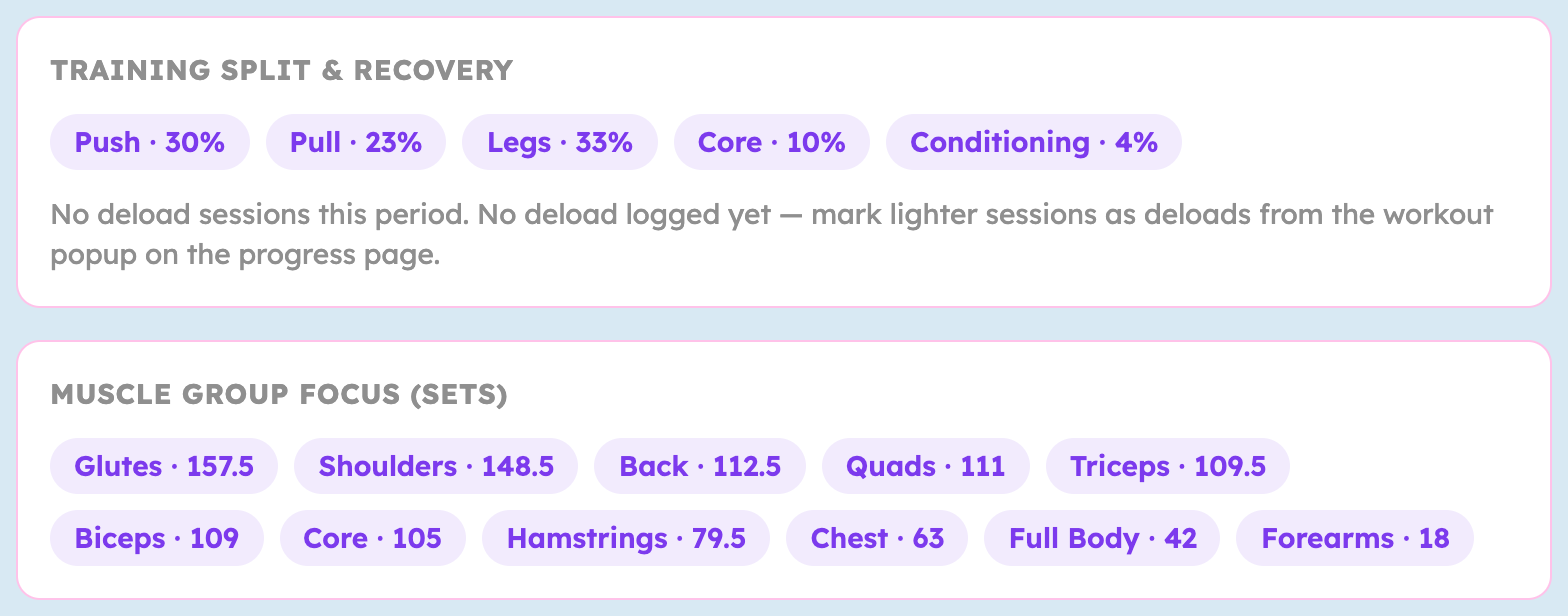
Logging every set shows what actually gets worked over seven weeks, and this is the most balanced program I’ve tracked so far. Legs made up 33% of my sets, pushing 30%, and pulling 23%. Glutes and shoulders got the most work, with back, quads, triceps, and biceps all close behind.
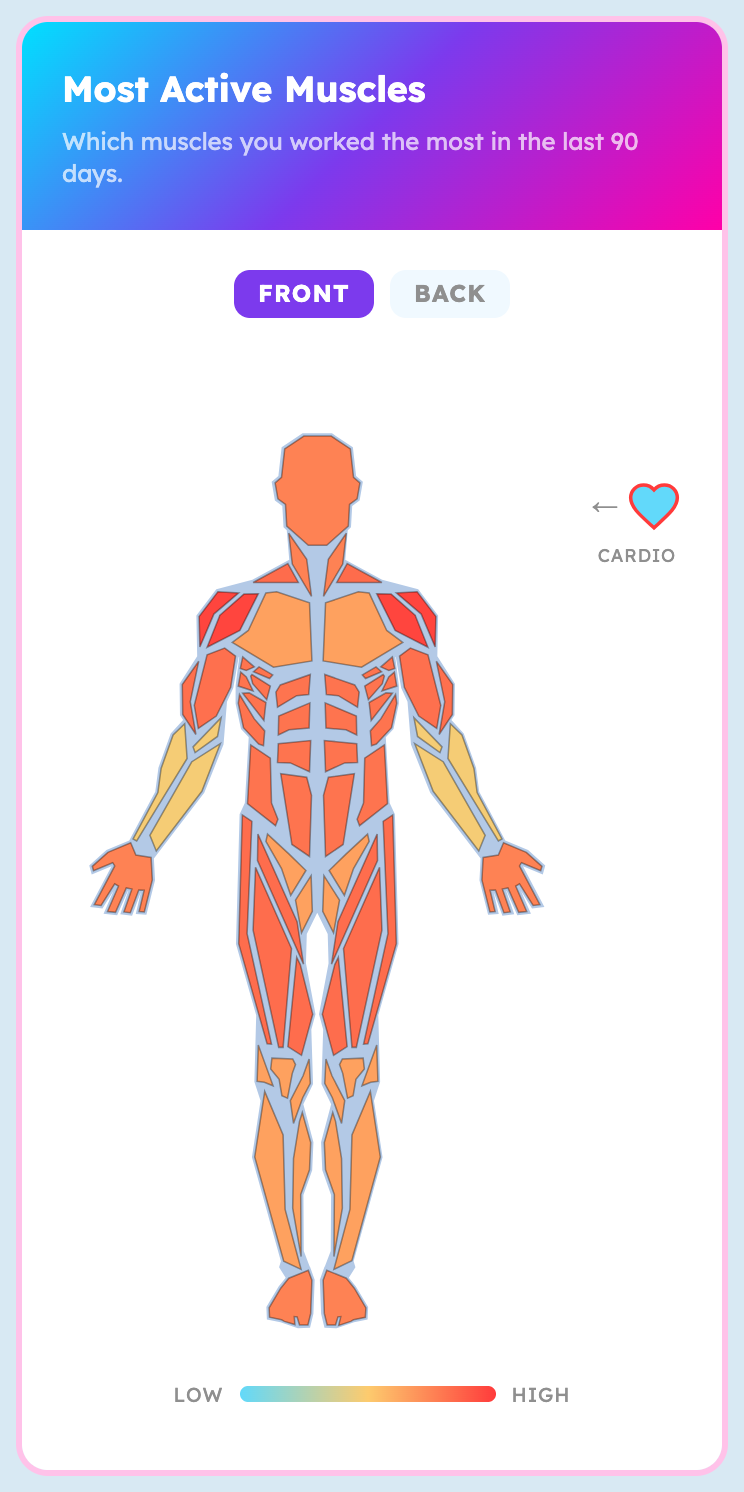
The two blind spots in the data: calves and chest. Calves got zero dedicated sets across all 21 workouts, and chest finished with the fewest sets of any major muscle group (63, compared with about 112 for back and 148 for shoulders).
Both are easy fixes. Add three sets of calf raises to the end of one workout a week, and a couple of sets of push-ups to the end of two workouts a week. That’s just a few extra minutes a week for a very well-rounded seven weeks.