
All Machines All Week by KevTheTrainer: A Trainer's 30-Day Guide
By Team Veronika Fitness · November 16, 2026
A certified group fitness instructor who works as a trainer at a gym.
I work as a trainer at a gym, and I’ve been working through complete workout series from different YouTube creators—doing every workout and logging all the sets and minutes—to see whether a program actually fits your body and your goals.
Second on my list: KevTheTrainer’s Full Week of Workouts for Beginners at the Gym. It’s completely free, and every single exercise is on a machine.
A little backstory on why this one came next: after my hernia, Christina Dorner’s Move to Improve was how I eased back into moving at home. Once that month was done, I wanted to start adding real load again—but I wasn't ready to jump straight back into my old training. Machines felt like the sensible next step. The movement path is fixed, you can bump the weight up one plate at a time, and you can stop a rep whenever you want without a dumbbell or barbell landing anywhere.
Honestly, it’s also the exact kind of plan I’d want to hand a brand-new gym member. The hardest part of a first month at the gym usually isn't the lifting—it's standing in front of a row of machines having no idea where to start.
One thing to know up front: this isn't a follow-along video series. It’s a single 18-minute video where Kev walks you through the entire week, machine by machine. You watch it once, jot down the plan, and take it to the gym. Since his plan covers one week, I repeated it for 30 days.
What the week actually looks like
Six workouts and one rest day:
- Day 1 — Upper body push: Chest press, overhead press, tricep pushdown, chest fly, tricep extension
- Day 2 — Lower body (quads): Leg press, leg extension, calf raise, hip abduction, hip adduction
- Day 3 — Cardio & core: 25 minutes on any cardio machine, then machine crunches, hanging knee raises, and planks
- Day 4 — Upper body pull: Lat pulldown, seated row, bicep curl, rear delt fly, assisted pull-ups
- Day 5 — Glutes & hamstrings: Hamstring curl, glute kickbacks, calf raise, hip abduction, hip adduction
- Day 6 — Cardio & core: Same as Day 3
- Day 7 — Rest
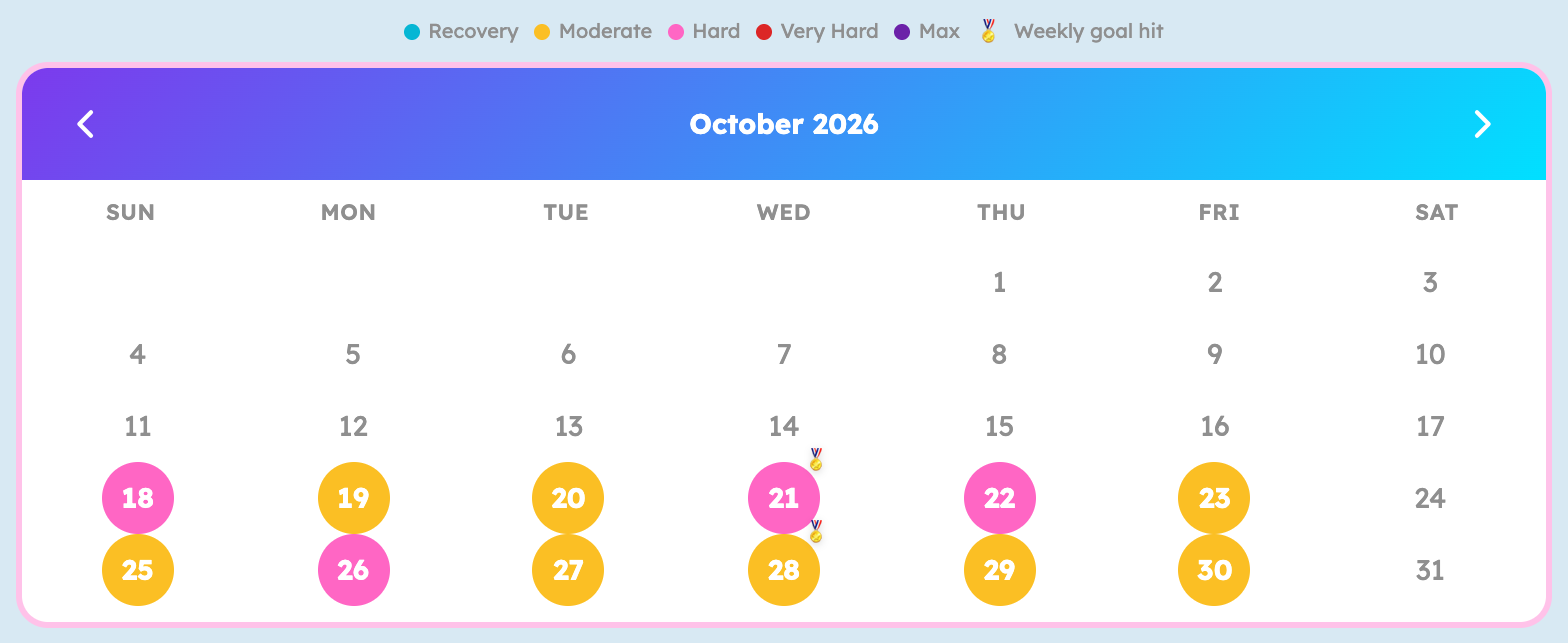
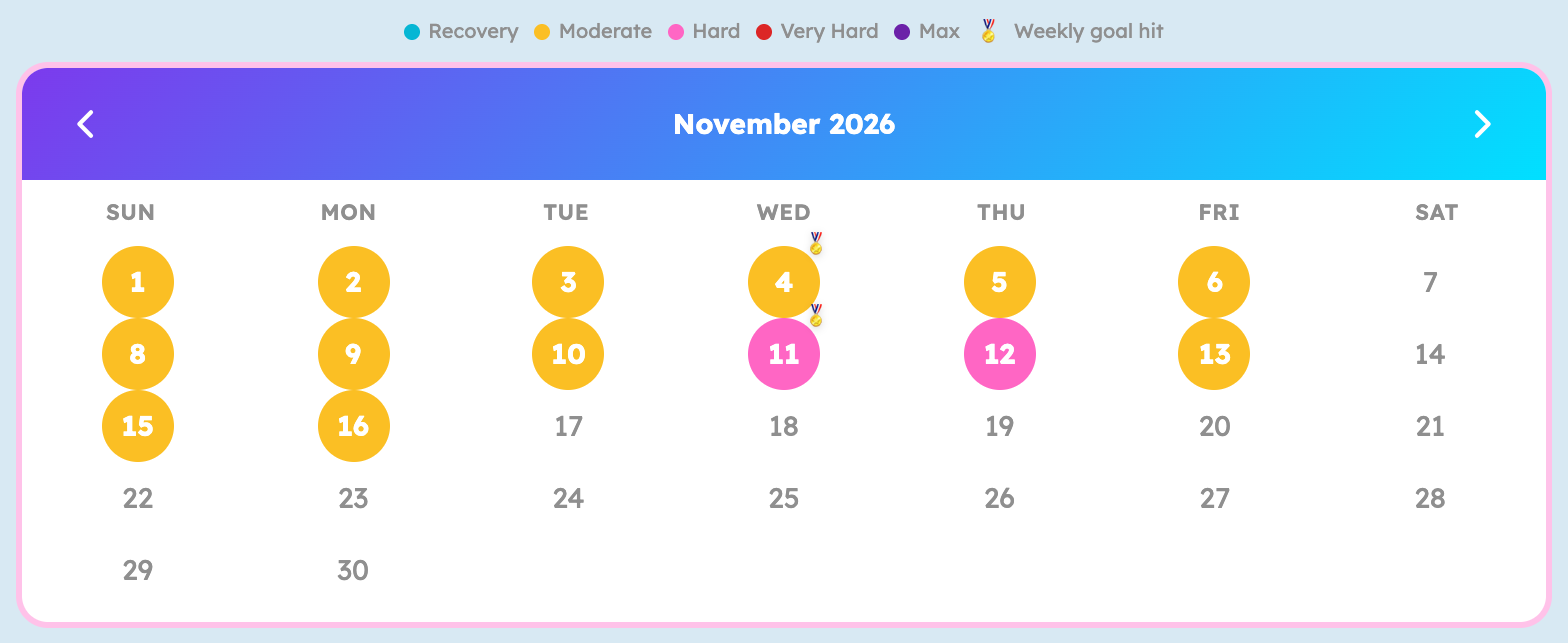
Each strength day is five machines, three sets each, plus a warm-up and cool-down. Mine ran 38 to 49 minutes, averaging 44 minutes. Over 30 days, that came out to 26 workouts and 4 rest days.
Kev's coaching style
Kev teaches like a patient trainer leading a gym-floor orientation. Before he even touches the first workout, he covers the basics most videos skip—what reps, sets, and rest actually mean, how to warm up and cool down, and how to pick your starting weight (the last two or three reps should feel challenging, but doable).
From there, he goes machine by machine. For every single one, he shows you where to set the seat, where the handles should line up, when to breathe, and what muscles you should actually feel working. He also drops in the exact cues I’d give a client in person, like not locking out your elbows on the shoulder press or your knees on the leg press. If you want more detail on a specific lift, he has separate tutorial videos for each muscle group linked right from the main video.
What this program is best for
- General strength and conditioning for beginners: A balanced week—four strength days and two cardio-and-core days—that covers everything a new gym-goer needs.
- Building muscle: Better than you’d expect from a beginner plan. Machines let you push close to your limit safely, the sets sit in the 10-to-15 rep range, and repeating the week makes it easy to add weight. Each muscle only gets trained about once a week, so it’s a starting point rather than a long-term muscle-building plan.
- Fat loss: The exercise side is well covered, with two dedicated cardio sessions on top of the lifting. As always, the rest comes down to what you eat.
How it felt in real life
The first day was mostly logistics: hunting down each machine, adjusting the seats, and keeping every stack light while I figured out the setup. By the second week, I wasn't thinking about where to walk next, and that's when it started to feel like real training instead of a scavenger hunt.
The assisted pull-ups were humbling. I started with 100 lbs of counterweight help, and watching that number drop became the thing I looked forward to most on pull day. Meanwhile, the two cardio-and-core days were a welcome break from lifting—25 steady minutes on whatever machine I felt like, followed by a quick core circuit.
Doing the exact same six workouts every week sounds repetitive—and it is. For a beginner, though, that’s a feature, not a bug. By the last full week I knew the routine by heart, and every single machine had moved up at least once.
The trainer-nerd takeaways (and the numbers)
Running the month through my tracker (SweatHard.fit) turned up a few things under the hood:
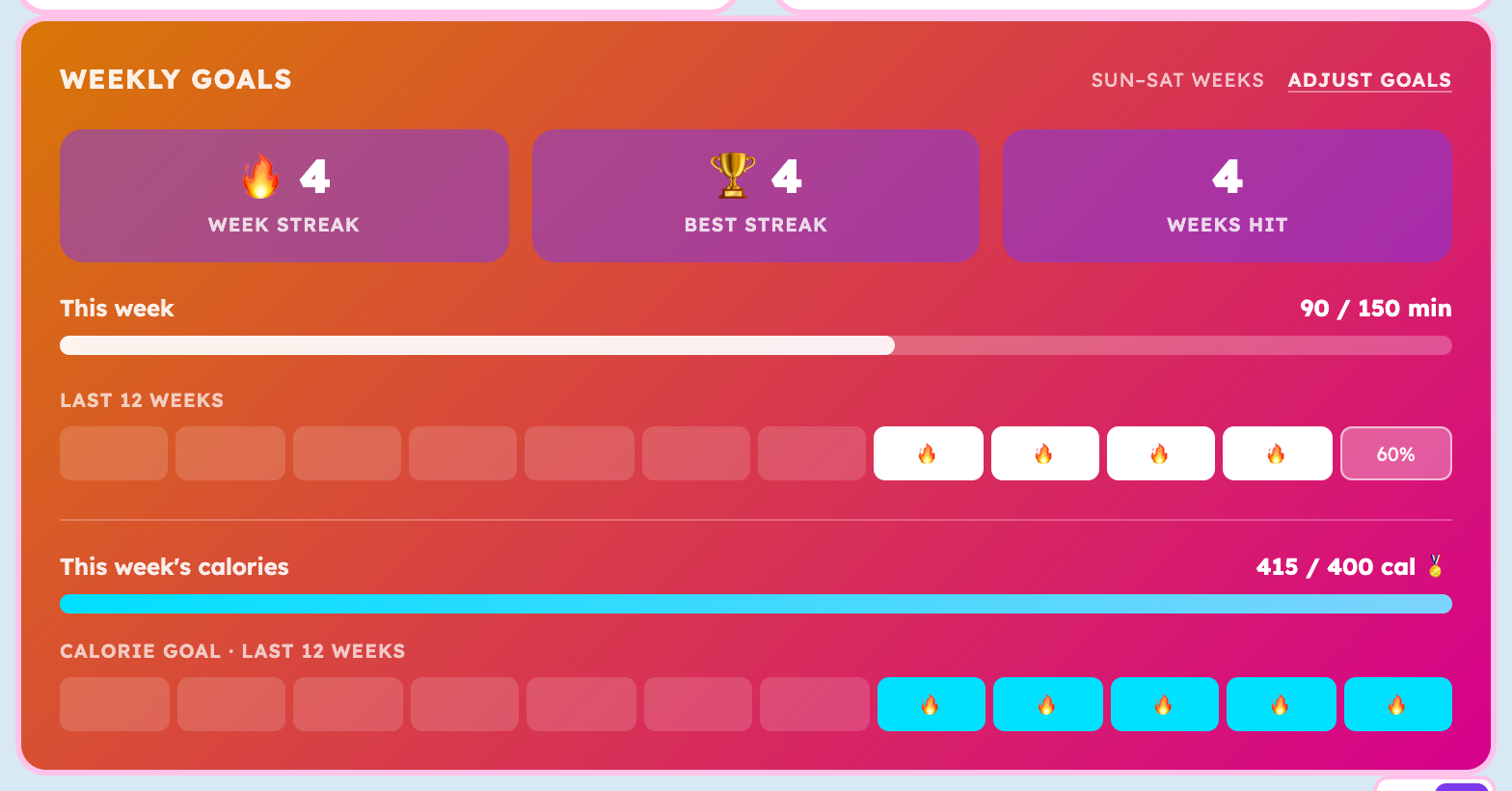
- It clears the weekly guidelines with room to spare: I logged about 19 hours across the 30 days. Every full week landed between 264 and 270 minutes—well over the standard 150-minutes-a-week activity guideline, with a real rest day built in.
- Repeating the same week IS the progression: The exercises never change, so the only variable that moves is the weight stack—and that's the whole point. Because you meet each machine once a week, you always know what you lifted last time. Over the month, my leg press went from 90 to 120 lbs, my chest press went from 40 to 50 lbs, and the counterweight I needed on assisted pull-ups dropped from 100 down to 80 lbs.
- A real strength-to-cardio mix: 68% of my minutes were strength and 32% were cardio and core. Two dedicated cardio sessions a week is more than most beginner lifting plans bother with.
- Equipment: Any standard commercial gym. Nothing here requires a barbell, a spotter, or even stepping into the free-weight area.
Who I'd recommend this to
- Anyone walking into a gym for the first time who wants a clear plan in their pocket instead of wandering between machines.
- People who just finished an at-home beginner program and want to start adding real load.
- Anyone who finds the free-weight area intimidating—machines handle the stability, so you can focus on effort instead of balance.
- People coming back from an injury or long layoff who want controlled, predictable resistance while they rebuild strength.
Who will probably be bored
If you're already comfortable with barbells and dumbbells, you'll outgrow this quickly—machines don't train stabilizer muscles, balance, or coordination the way free weights do. And if you want someone on screen working out with you in real time, this isn't that; it's a blueprint, not a follow-along class.
The muscle-balance check (and two easy things to add)
Logging every set shows what actually gets worked over 30 days. Legs lead the way here: glutes and quads together make up roughly half of the total volume, and core gets plenty of love from the two cardio-and-core days. Calves—which most beginner plans completely ignore—actually get trained twice a week.
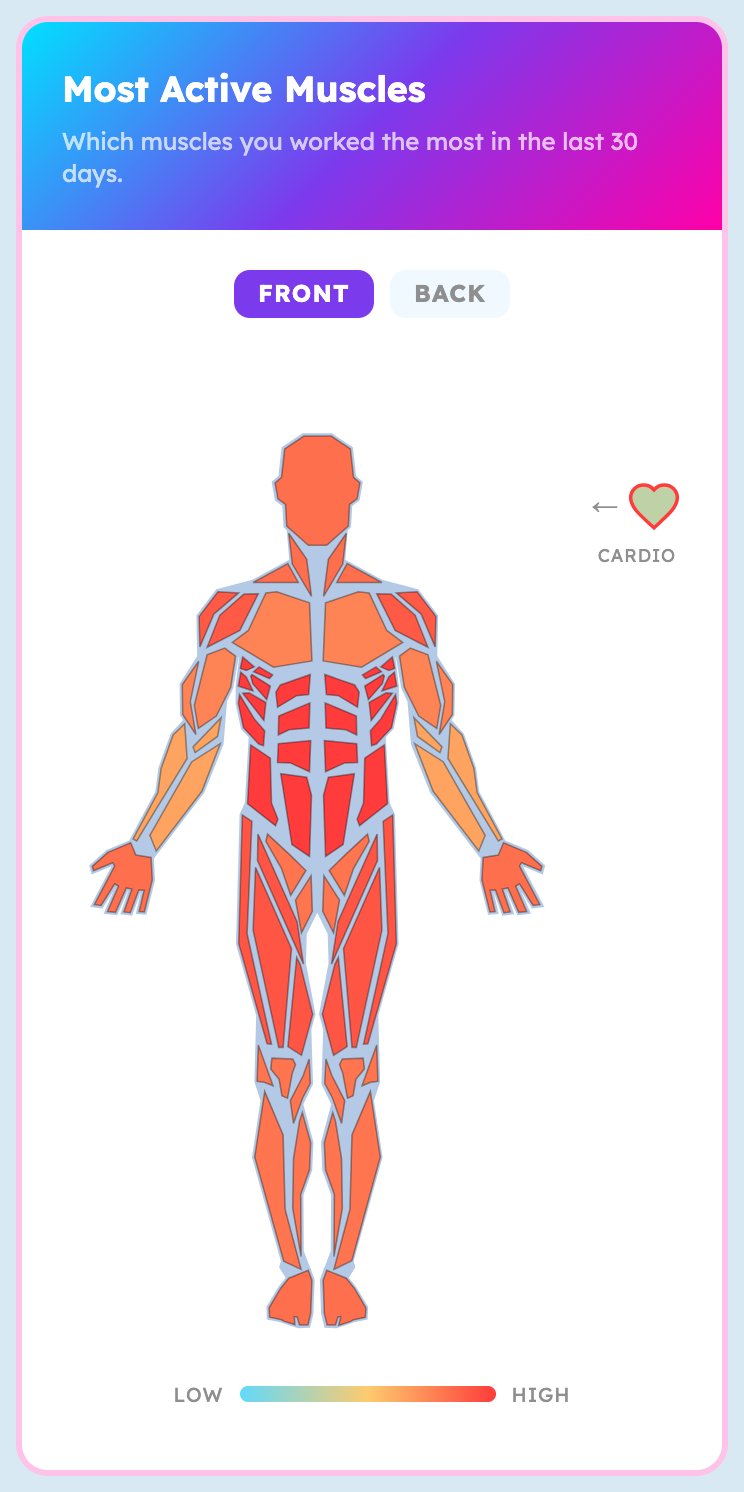
The two blind spots in the data: hamstrings and upper-back pulling. Hamstrings only get one exercise a week (the hamstring curl), so they finished with about half the volume of quads or glutes (31.5 sets vs. 57 and 66). Pressing also noticeably outweighs pulling: my tracked split came out to 25% push vs. 16% pull.
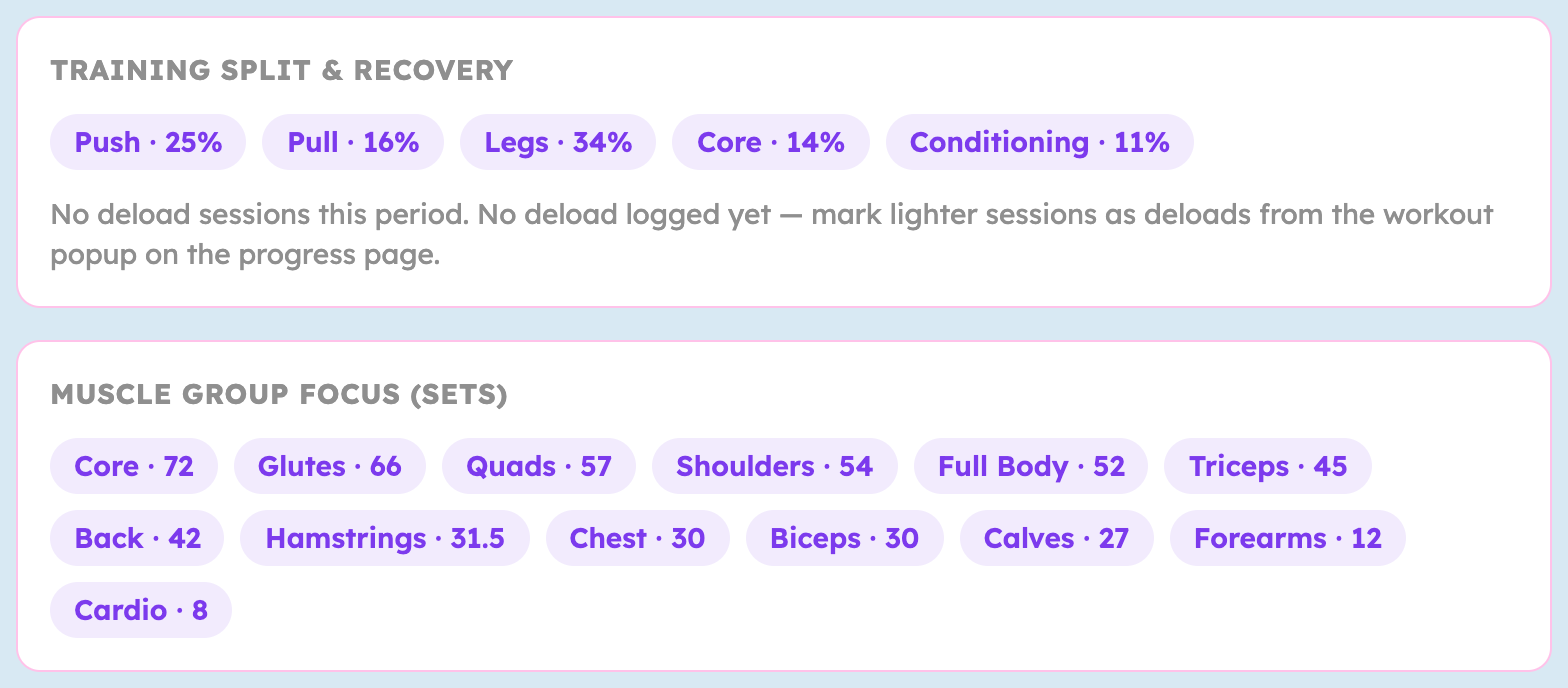
Both are super easy fixes without ever leaving the machines: add the back extension machine to Day 5 for a second hamstring-and-glute move, and tack on one extra set of seated rows on Day 4. That’s roughly five extra minutes a week for a much more balanced month.